

Come Alive! A Public Speaking and Presentation Skills blog
with themes, tips, strategy, reflections and other beneficial resources
for the communications community
with themes, tips, strategy, reflections and other beneficial resources
for the communications community
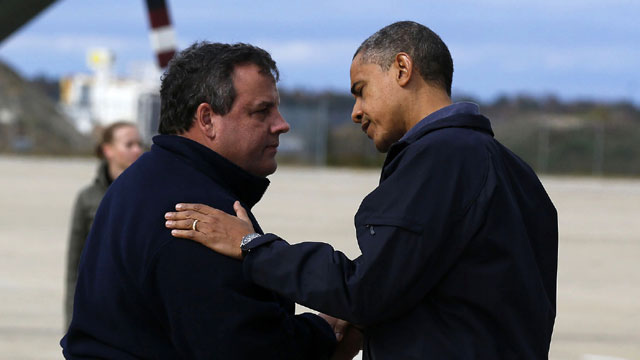 If you want to see a good example of partnership, collaboration, and sharing the stage, then take notice of the current interactions between President Barack Obama and New Jersey Governor Chris Christie. Even though these two men are political opponents and have had their differences in the past, they are clearly demonstrating that they are capable of doing their jobs as leaders during one of the worst natural disasters in our history. And in doing so, their partnership has been a compliment to both of them.
In the aftermath of Hurricane Sandy, Christie has shown genuine leadership and has publicly praised the president—the man he is hoping people vote out of office this month. But during this moment in our history, it seems that both men are putting politics aside and truly being allies. “I cannot thank the president enough for his personal concern and compassion for our state and the people of our state,” Christie said after surveying the damage with the president. He later added, “When the president does things that deserve praise, I will give him praise.”
Obama, too, has publicly acknowledged Christie. “I just want to thank him for his extraordinary leadership,” Obama told reporters. “He’s been aggressive in making sure that the state got out in front of this incredible storm. And I think the people of New Jersey recognize that he has put his heart and soul into making sure that the people of New Jersey bounce back even stronger than before.”
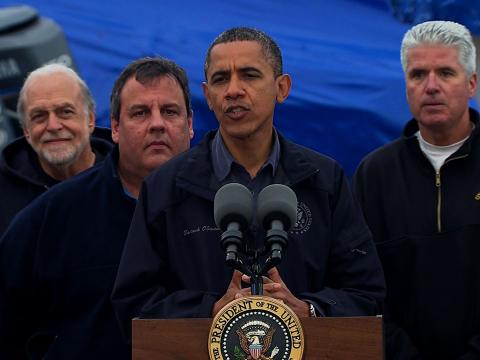 Over the past few days, these two rivals have stood no more than one foot apart, complimented each others’ leadership, and shared a common goal. Together, they have kept the focus on the victims and the first responders, never letting politics or bureaucracy get in the way.
Because of this wonderful display of collaboration, people from coast to coast are reassured and have greater confidence in the government’s ability to help in this type of crisis. In fact, I’d even say that this is a thrilling demonstration of bi-partisanship, and the fact that it’s happening on the main stage for all to see is a tribute to our democracy.
Even though these two men are very different, not only politically but also in style, tone, affect, physical presence, etc., they are bridging their difference to be one united front so they can do their jobs and help those in dire need. This show of teamwork is truly remarkable.
Granted, there is still a long road ahead for the people who were affected by Hurricane Sandy’s wrath, but these two leaders have provided what all good leaders provide in a crisis: A sense of urgency, clear direction, and inspiration, instilling confidence in all of us that we are never alone, and that democracy and politics really can work.
November 2nd, 2012 | Permalink | Trackback |
No Comments » |

 Continuous learning is a key indicator of success. That’s because learning, at any stage of your career, means growth. New skills, new behaviors, and new knowledge translate into new opportunities. Achievement oriented people love and embrace this type of challenge.
I’ve found that people seek continuous learning for various reasons. Sometimes it’s simply for the joy of learning. Other times there’s an outside force, such as a promotional opportunity or feedback from a boss or colleague that something needs to be fixed. And in some cases, the desire for learning stems from an internal force—the realization of a limitation or the feeling of being “fed up” with a certain behavior or attitude.
Whatever the driver, continuous learning is a process that requires a deep personal desire, a commitment of time, and the willingness to exert effort. What kind of effort? Well, that depends on what you’re trying to learn. In terms of learning related to improving presentation skills, the top things to work at are:
Above all else, brag about your success! If you become a consumer of speaking, set long-term goals, practice daily, and leave no stone unturned, you deserve to celebrate. When it comes to continuous learning, every day will offer new opportunities for success, growth, and professional advancement.
October 24th, 2012 | Permalink | Trackback |
1 Comment » |
Those of you who know me know that I’m a huge Oakland A’s fan. Well, last night’s baseball game between the Oakland A’s and the Detroit Tigers left even me—a speech coach—speechless. Picture this: It’s game 4 of the American League Division Series. The Oakland A’s aren’t the favored team to win. In fact, they’re performing terribly. It’s the bottom of the ninth. The score is tied. The A’s are up to bat. It’s the final moments of the game, and then suddenly…against the odds…the A’s win on Coco Crisp’s walk-off single. The crowd went wild! And so did the announcers. You can hear the announcers during the exhilarating final moments here.
After the excitement died down and I replayed the footage in my head, I realized how the announcers Ken Korach, who does the play-by-play, and Ray Fosse, who does the color commentary, displayed their passion about the outcome yet maintained their professionalism throughout it all. It’s a classic lesson for public speakers everywhere.
I often tell my clients to let their passion guide their speaking. But really…what are the elements of passion? What does passion sound like from that vocal context?
As the clip of Korach and Fosse exemplifies, passion has two key parts. First, it’s the formal, technical, and mannered play-by-play of information. When you listen to Korach explain what’s going on, you hear every detail to the point where you can see it in your mind. It’s factual. It’s complete.
But the second part of passion is the free and unbridled response to what’s going on in the moment. That part of passion is incredibly clear in Fosse’s animated assessment of what’s happening in those key moments.
So as a speaker, you need to manage the characteristics of these two announcers during every presentation. You need to be the formal person with the details and the facts. But you also need to show your excitement, your enthusiasm, your zeal, and your passion for your topic.
It’s the combination of these two qualities in one person that ignites the spark of passion. That’s what ultimately captures the hearts and minds of your listeners and makes your message come alive.
The final game in this series is tonight. If the A’s win, we keep going on the road to the World Series. I’m keeping my fingers crossed and my passion alive. Go A’s!
October 11th, 2012 | Permalink | Trackback |
No Comments » |
By now, we all know that practicing your presentation and working on key public speaking skills will make you a better presenter. But practice and skill aside, there are other, more tangible, things that will help you excel at business presentations. I call these things your “toolbox essentials.”
Just as you prepare for your job by making sure you have key supplies on hand, when you’re taking on the role of “presenter,” you must prepare by making sure your speaker’s toolbox is stocked. Following are my top recommendations for any speaker’s toolbox.
Tools and Resources for Your Toolbox
Wellness Tips for Your Toolbox
The better prepared you are for any presentation, the more effective your speech will be. So take the time to pack your toolbox items; you’ll stand out and impress your audience.
September 26th, 2012 | Permalink | Trackback |
6 Comments » |
Have you ever been to a business meeting or other event and unexpectedly been asked to stand and “say a few words”? This happened to three of my clients recently. One woman told me how her confidence soared and she excelled at giving a presentation to her company’s executive staff, yet she fumbled when asked on-the-spot to speak to company interns. Another man told me how he loved speaking at his all hands meeting, which had an audience of 500, yet he choked when asked to speak impromptu to a small field sales group. And my own son, usually a composed speaker, “blanked out and babbled” when asked to speak at a recent awards meeting to honor his own promotion.
These are all competent and experienced speakers, yet they all stammered when asked to present unexpectedly. Why?
When you know you are going to be giving a speech, whether to your executive staff, at an all hands meeting, or in any other public speaking situation, you have time to plan and prepare. It doesn’t sneak up on you. You can develop a grand theme and strong message, build stimulating slides with eye catching visuals, and rehearse your delivery and staging to perfection. Time is on your side and the equation is simple: the quality of your presentation will be matched by the quantity of your preparation.
But what about the impromptu speech? What can you do to you maintain your confidence, add value to the conversation, and sound convincing and eloquent when you have no time to prepare?
First, realize that you have given hundreds of impromptu speeches before—such as when you added input during a business meeting, informed your new employee how to follow a procedure, asked a question of your boss or responded to a question by a colleague, spoke up at your child’s school PTA meeting, and even talked to the manager at a retail store to offer praise or advice regarding an employee. Think of how you behaved in these situations. Most likely you were calm, confident, and concise. And that is the formula for impromptu speaking success—stay relaxed, organize your thoughts, and limit yourself to a few, salient remarks.
When it comes to putting this formula into practice before an impromptu speaking opportunity, I recommend using a simple beginning, middle, end (or one, two, three) structure and specific language to help you remember the flow.
One of my clients, who is very good at impromptu speaking, says that even though he is not on the formal agenda to speak everywhere he goes, he is usually asked to say a few words. Knowing this, he never waits to the last minute to gather his thoughts. He uses this three step process to prepare ahead of time so he is never caught off guard.
So if you are going to an event and there is even the remote possibility that you may be called on to speak, take the time to prepare in advance. Use this three-step process and you will appear calm, confident and concise—the epitome of a polished speaker.
September 20th, 2012 | Permalink | Trackback |
No Comments » |
It has been an oratorical feast at the Democratic National Convention in Charlotte this week. Any aspiring or seasoned public speaker has a ringside seat to observe some of the best main stage political speakers in the world.
As a speech coach, it has been delightful to witness such passionate oratory delivered via powerful performance techniques and heartfelt storytelling. Yesterday I wrote about Michelle Obama, Julian Castro, and Deval Patrick. If you missed it, you can read it here.
Last night, as I anxiously waited to hear former President Bill Clinton speak, I marveled at his “warm up act,” Elizabeth Warren.
Another great storyteller like those the night before, Elizabeth Warren began her speech by saying, “I grew up on the ragged edge of the middle class.” Within the first few minutes of her talk we learned a lot about her—she married at 19, went to college, had children, taught school and was “grateful down to my toes for every opportunity America gave me.”
Warren has a wonderful quirky style, soft and quiet at times, but more often quick paced and urgent. She asks a lot of pointed rhetorical questions, “Does anyone have a problem with that?” She uses repetition effectively, “No-one, no-one can stop us.” And she understands the importance of the applause pause. A highly convincing speaker, Warren tells us with everything she’s got not only what she believes is important, but what she wants us to believe. It was a joy to watch her work the crowd.
And then there was Bill…
After all these years of hearing Bill Clinton speak, I shouldn’t be amazed, but I was. Actually, I was blown away. How did he manage to give a long policy speech packed with complicated ideas and details that was also light, entertaining and fully digestible? Leave it to his folksy style to make sure we were clearly following every step of the way.
With his alluring invitations, “Now listen to this” or “Consider this” or “Now wait” he kept us on track. He had an agenda, and I felt like we were on a long train moving from car to car, staying in each one just long enough to hear the facts, comparisons and contrasts before moving on as he methodically and forcefully built his case.
Clinton is undeniably the best public speaker we have today, and I wrote about him when he spoke at the 2008 DNC. Just as last time on this stage, he did everything right—from his conversational and engaging delivery, his irresistible smile and inviting eyes, and his graceful gestures and relaxed torso to his musical vocal cadence, pitch, inflection and pauses. He gave us the medicine—a meaty, informative and convincing message—with a spoonful of sugar.
I don’t know how Barack Obama will top this…but I’m sure he will. And I can’t wait!
September 6th, 2012 | Permalink | Trackback |
1 Comment » |
What fun to watch the speeches last night at the opening of the Democratic National Convention in Charlotte NC. I was delighted to see such passionate oratory delivered via powerful technique and heartfelt storytelling. The “story” has always been a strategic ally of political speech-making, and last night gave us many good examples of how it helps speakers reach right into every heart and mind to create connection.
Michelle Obama’s speech was striking because of her ease and accessibility, as if this was just another of the tasks she did that day as wife, mother and first lady. She is a unique communicator—comfortable and personal—who elegantly used stories to connect to each of us. We heard the story of her early life, the story of her early life with her husband, the story of her early feelings about being the First Lady, and the story of her current life with her family.
In addition to talking about her life, she made simple statements about her husband’s accomplishments—nothing grand or grandiose. It felt like she was talking to us in the intimacy of our living room. And the section on why she loves her husband was to me the most touching and effective I’ve heard. She was truly connecting with people, not reading lines from the teleprompter. The speech was beautifully written and beautifully delivered by someone who, as people say, is “the real deal.”
Julian Castro told a great story as well. His was one of those “only in America” stories, complete with lingering images of his grandmother making the sign of the cross and blessing the young twin brothers as they left for school in the morning. In this story, every detail added to the impact. We saw his grandmother, the two young boys, and the daily morning ritual that happened many years ago.
I was also impressed with Castro’s ability to try a range of delivery techniques. You could clearly see the techniques at work. And although they didn’t always work for him, he gave it his all. I was impressed watching this budding political speech-maker. As he gains experience on the main stage he will certainly be successful. Even though he hasn’t perfected every stage technique, he has mastered one—the story.
Governor Deval Patrick was equally profound. If you didn’t have a chance to see his speech, I recommend you watch it now. Don’t wait! I had never seen Patrick, Governor of Massachusetts, although I have heard that he is an excellent speaker. Along with the rest of America, I was riveted. Charismatic in the style of the traditional Southern Baptist Preacher, he brought it on—it was the WOW factor in abundance.
His resounding voice and intonation, coupled with his use of the dramatic pause, made for a forceful and motivating speech. He used the repeated phrase “we believe” as he laid out the democratic platform. But like any great political speech, it wasn’t just his delivery. His message combined substance and structure with bursts of gut-felt sticky phrases, such as “Turn to each other, not on each other” and “It’s time for Democrats to grow a backbone and stand up for what we believe in.” And he gave direction, as in, “Don’t allow Obama to be bullied out of office.”
He, too, told a difficult to hear story about the Orchard Gardens School and their struggle to survive in the midst of extreme poverty and limited resources.
There were many more speeches yesterday from key players and unknown citizens, but these three powerful speakers were in the prime time spotlight. Tonight we will hear from the master speech-maker: Former President Bill Clinton. I can’t imagine how he will top last night’s oratorical feast—but I’m sure he will.
September 5th, 2012 | Permalink | Trackback |
1 Comment » |
If you’re looking for an example of someone who knows how to create a fire in the belly of an audience, look no further than President Obama’s speech last Friday in Urbandale, Iowa. There, Obama launched The Road to Charlotte Tour with a rousing rebuttal to the GOP convention platform last week.
There are numerous best practices to note in this speech, but the one I want to emphasize is the use of his overall energy. Obama is the epitome of a public speaker who knows how to “create performance combustion.” This is a term I use often to describe how a speaker can bring an audience to life.
When I talk about creating performance combustion, I use the metaphor of creating fire. As any good scout knows, to create fire, you need the three elements of heat, fuel, and oxygen. I like to think that these three elements correspond to the use of our body, our voice, and words. And just as fire requires that each of these elements be present to keep the fire glowing, the same can be said about the speaker’s use of physical energy, vocal energy, and verbal energy. The combination of our physical, vocal, and verbal skills creates something bigger than any one element can provide.
To be able to create a fire in the belly of our audience, we have to have that fire already burning hot in our own belly. That’s what Obama showed us on Friday. Let’s take a look at how he used each “element” of fire to intensify our experience—to rouse and excite the crowd.
People always ask me what it takes to be a good public speaker. The answer is simple: You have to be willing and able to create performance combustion—especially with your voice.
So, in addition to recommending TED talks and C-Span when looking for examples of good and bad public speaking, today I recommend Obama’s speech in Urbandale. Politics aside, you will see speech skills and techniques in abundance and clearly available for analysis. I watch a lot of speeches. Some make me think, some make me sleep, but few make me feel. This one was invigorating. Obama, the candidate, has returned, creating fire once again.
I’ll be blogging about many of the speeches at the DNC this week and hope you will add your candid thoughts and comments to my posts. Stay tuned.
September 4th, 2012 | Permalink | Trackback |
No Comments » |
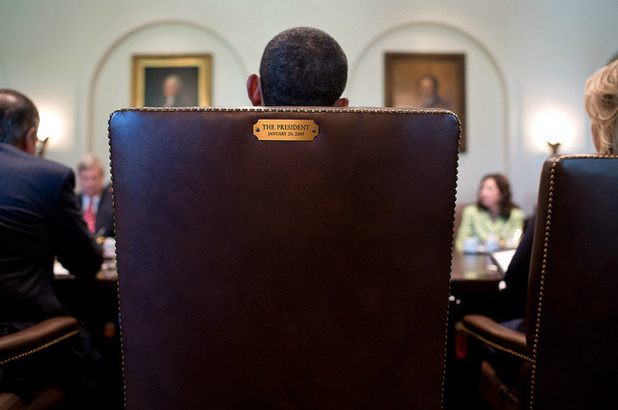 Along with many people, I’m still scratching my head about Clint Eastwood’s speech at the Republican National Convention last night. I can only think that this is another example of what can happen when good intentions go awry.
From my understanding, Clint’s appearance was unplanned, and within a few sentences into his speech, I could sense that his words were unplanned too. His unprepared and unrehearsed presentation quickly turned to rambling.
As a speech coach, I thought I’d give Clint some advice so that next time he is asked to give a speech on behalf of a candidate for president of the United States he knows what to do. But after last night, I doubt there will ever be a next time.
Today, I have hea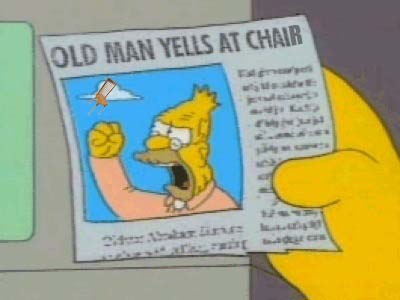 rd various people defend Clint Eastwood. One person told me, “I thought for being 83 years old and talking off-the-cuff that he did pretty good.” To that I say what I tell anyone I coach: For high stakes speeches such as this, “off–the-cuff” will never get you where you want to be. You have to know your sponsors, know your audience, and know your opponents…and then you must prepare as if YOU were running for office. Your goal should be to have your listeners take action on your message, which in this case was to support and vote for Mitt Romney. After Clint’s speech, the only action people took was creating an explosion in cyberspace making fun of Clint and his (failed) delivery. No one today is talking about Mitt Romney.
But despite all this, Clint’s reputation will live on. He did, after all, manage to do what he is famous for: He made my day!
August 31st, 2012 | Permalink | Trackback |
3 Comments » |
When it comes to visual aids for a presentation, what’s the first thing you think of? If you said “PowerPoint™” or “slide ware,” you’re in the majority. That’s the default most presenters rely on. But the answers about visual aids that I’ve been getting from my clients recently (and what I’ve seen at their locations) have surprised even me.
For example, I was working with a client in June and walked into the training room to find a chalkboard and box of chalk greeting me.
A few weeks later I walked into a client’s conference room to find an overhead projector.
Last week I was walking down the halls of a large tech company and peered into a conference room. I saw two walls of whiteboard covered with neatly drawn flow charts, bullet charts, and various other schematics—in bright colors.
A few days ago I was working with a client who used colorful 3×5 index cards to organize his key points and deliver his presentation. He rarely uses slide ware but relies instead on his conversational style and deep subject knowledge.
And just yesterday I watched a presentation where the presenter used a flipchart.
So, when was the last time you used a chalkboard, an overhead projector, a whiteboard, a flipchart, or even no visuals at all?
These clients I visited from various industries and organizations—a dental school, a utility company, a software company, a transportation company, and a non-profit organization—all taught me a lesson.
It’s easy to become complacent and narrow-minded about the types of visual aids we use—or don’t’ use. It’s also easy to fall into the trap of thinking that to be effective, a visual needs to be cutting edge and show off the latest visual gymnastics that PowerPoint can produce. And while I was at each location to share “best practices” and reveal the top design tips and staging usage, I learned that every one of these places and people were effective and had an impact because they knew their audience and used visual tools that they could relate to.
So when it comes to visual aid selection, here’s my best advice: Analyze your audience so you know what they expect and what will work for them. Then, understand the options available to you. Know what you are comfortable with and what will help you do your best to meet your audience’s expectations. When you follow that guidance, you’ll be able to produce visual aids that help both you and your message come alive and connect to the heart and mind of every audience member.
August 28th, 2012 | Permalink | Trackback |
3 Comments » |
FREE REPORT! Sign up now and receive: The Top 10 Presentation Tips to Help You Come Alive!
Speaking Spas is a new concept—a speaking school designed especially for professional women who want to accelerate their presentation skills and enjoy the nurturing and relaxation of a spa setting. Join Angela and the DeFinis team. It will change your life!